


先日、沖縄本島でアイヌ民族による「カムイノミ」というお祈りがあると聞き、実際に参加してきました。
アイヌ民族は、日本に古くから住んでいる先住民。約3万年前から存在していたとも言われていて、縄文時代から自然と共に平和に暮らしてきた人たちです。
「カムイ」とは神、「ノミ」とは祈るという意味で、「カムイノミ」とは自然界の神々に感謝や想いを伝える神聖な儀式だそうです。
アイヌの世界では、すべてのものに魂が宿るとされ、とくに人間に恵みを与えてくれる動物や植物、火、水など、人知を超えた自然を“カムイ”として敬います。そしてそのカムイに感謝を伝えるとき、「カムイノミ」が行われます。
儀式の始まりと、突然の嵐
今回のカムイノミは、沖縄本島の平和記念公園 うみそら公園で開催されました。参加者は入場前にそれぞれお気に入りの食べ物をカムイへの捧げものとして持参するのが習わし。僕はすっかり忘れてしまい、急遽その場にあったケロッグをお供えすることに(笑)。気持ちが大事です。
儀式が始まった途端、なぜか風と雨が一気に強まりました…。でもそんな中でも、シャーマンのレラさんたちは静かに、集中して祈りを捧げていきます。
まずは火の神や精霊に、日本酒が入ったお椀を手渡し、レラさんが丁寧に祈りを捧げます。そのあと参加者も一人ずつ、亡くなられた魂に向けて「ありがとう」「おつかれさま」と静かに祈ります。魂が上の世界へ向かえるよう、悔いや未練が残らないように見送る、そんな時間でした。
歌の祈りと、不思議な感覚
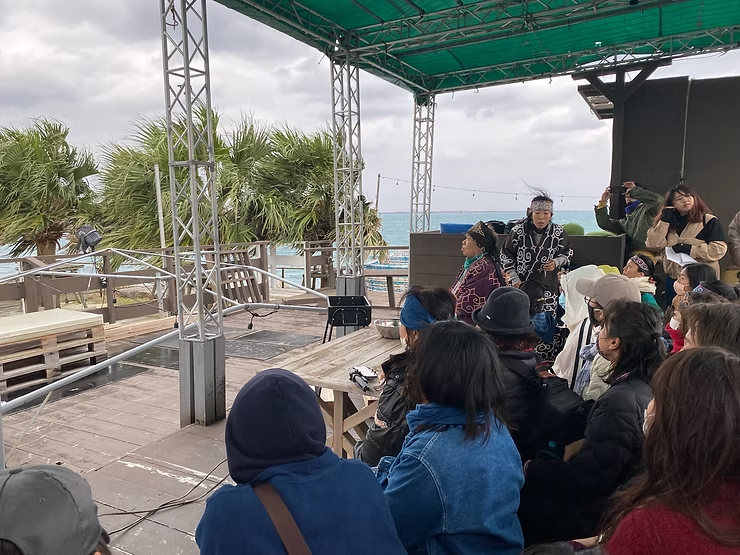
しばらくすると、歌での祈りが始まりました。
アイヌの祈りの歌は不思議な響きで、聴いているとだんだん意識がふわっとしてくるような、心地よさに包まれます。少し陶酔したような感覚になったのは気のせいではないと思います。
みんなが持ち寄ったお菓子も回ってきて、参加者全員で「いただきます」。これは自分たちがただ食べて楽しむのではなく、その行為自体が周囲の魂たちに捧げることになるという考え方なんだそうです。
儀式の終盤、そして感じたこと
もう一度歌の祈りが始まり、最後のクライマックスへ。
焚き火台から白い煙が立ちのぼり、どうやらそれが「成功のサイン」だそうです。
今回は嵐の中だったため自然の変化(雲の切れ間から光が差すなど)は見られませんでしたが、通常であれば儀式の終盤に雲が割れ、太陽の光が差し込む“神々しい瞬間”が訪れることもあるそうです。
こうした自然と共生してきた文化は、時代とともに失われつつありますが、今こそ現代人が学ぶべき大切な知恵が詰まっていると感じました。
また次の機会があれば、ぜひ参加したいと思います。
Experiencing “Kamuy-nomi”: A Sacred Ainu Prayer Ceremony in Okinawa
Recently, I had the chance to attend a spiritual ceremony called Kamuy-nomi, held in Okinawa.
Kamuy-nomi is part of the rich spiritual tradition of the Ainu, the Indigenous people of Japan who are said to have lived here for over 30,000 years.
The Ainu lived in harmony with nature, a way of life that stretches back to the Jomon period.
In the Ainu language, “Kamuy” means god or spirit, and “Nomi” means prayer — so Kamuy-nomi refers to a prayer ritual offered to the spirits of nature.
In the Ainu worldview, all things have a soul. Among them, animals, plants, fire, water, and the forces of nature that support human life are considered Kamuy — divine beings to be respected and thanked.
When people wish to express gratitude or deliver a message to these spirits, they perform Kamuy-nomi.
The Ceremony Begins – And So Does the Wind
This time, the Kamuy-nomi was held at Umisora Park in Okinawa’s Peace Memorial Park.
Before the ceremony began, participants were asked to bring a favorite food item as an offering to the Kamuy.
We totally forgot — so we ended up offering a pack of Kellogg’s cereal we had on hand. It’s the thought that counts, right?
As soon as the ritual began, the wind and rain picked up out of nowhere. But the shamans, including Rera-san, calmly carried on, fully focused on their prayer.
First, Rera-san offered sake in a wooden bowl to the fire spirit and other Kamuy.
Then, one by one, participants stepped forward to offer silent prayers, sending their messages of gratitude and comfort to the souls of those who passed away under difficult circumstances — lifting their spirits to the world above.
Songs That Touch the Soul
After a while, the prayer took the form of song.
There was something deeply moving about it. The tone, rhythm, and emotion resonated in a way that was both comforting and otherworldly.
Honestly, I found myself slipping into a sort of trance — in a good way.
As the ritual continued, snacks and sweets that had been offered were passed around, and everyone ate together.
But this wasn’t just a casual snack break — by eating together, we were symbolically sharing the offerings with the surrounding spirits, honoring their presence.
A Moment to Reflect
The final prayer song began, bringing the ceremony to its closing stage.
From the fire pit, a soft white smoke rose — a sign of success, we were told.
Although we didn’t get to see any dramatic natural shifts that often occur during these ceremonies — like clouds parting and sunlight pouring through — just being part of it all was a deeply meaningful experience.
As time goes on, the traditions of Indigenous peoples like the Ainu are fading.
But I believe there’s so much we can learn from their relationship with nature and the way they live in gratitude and balance.
If I get another opportunity, I’ll definitely attend again.